
Description
A clinical centrifuge is laboratory equipment used to separate different components of biological samples such as blood, urine, or other body fluids.
Hospitals, diagnostic laboratories, research centres, and private clinics across Uganda rely on clinical centrifuges when preparing samples for medical testing.
At Fern Medical Supplies, we supply reliable clinical centrifuges designed to support routine laboratory procedures in hematology, biochemistry, microbiology, and other diagnostic fields.
In medical laboratories, many tests require samples to be separated into their different components before analysis. Blood, for example, contains red blood cells, white blood cells, platelets, and plasma.
Doctors often require the plasma or serum portion of the blood for tests such as liver function tests, kidney function tests, glucose analysis, or hormone measurements.
Laboratory technologists use clinical centrifuges to perform this separation quickly and efficiently.
For instance, in a hospital laboratory in Kampala, a technologist may collect blood from a patient and place the sample tubes inside a centrifuge to separate the serum before sending it to a biochemistry analyzer.
Clinical centrifuges are also commonly used in laboratories performing urine testing, microbiology investigations, and molecular diagnostic procedures.
Urine samples may be centrifuged to concentrate cells or microorganisms that help diagnose infections. In microbiology laboratories, centrifuges may help prepare samples for microscopic examination or culture procedures.
Across Uganda, laboratories in district hospitals, referral hospitals, and private diagnostic centres rely on centrifuges as a routine part of daily laboratory work.
The equipment works by spinning sample tubes at high speeds, creating centrifugal force that separates substances according to their density. Heavier particles move toward the bottom of the tube while lighter components remain above them.
This process allows laboratory staff to isolate the portion of the sample required for testing. Because sample separation is essential in many laboratory procedures, the clinical centrifuge remains one of the most frequently used machines in medical laboratories.
In smaller health centres and large referral laboratories alike, centrifuges help laboratory staff process samples efficiently and prepare them for further analysis.
At Fern Medical Supplies, we provide clinical centrifuges suitable for hospital laboratories, diagnostic centres, and research institutions across Uganda.
Depending on capacity, speed control features, and rotor design, clinical centrifuges typically range between UGX 4,500,000 and UGX 18,000,000.

How It Works
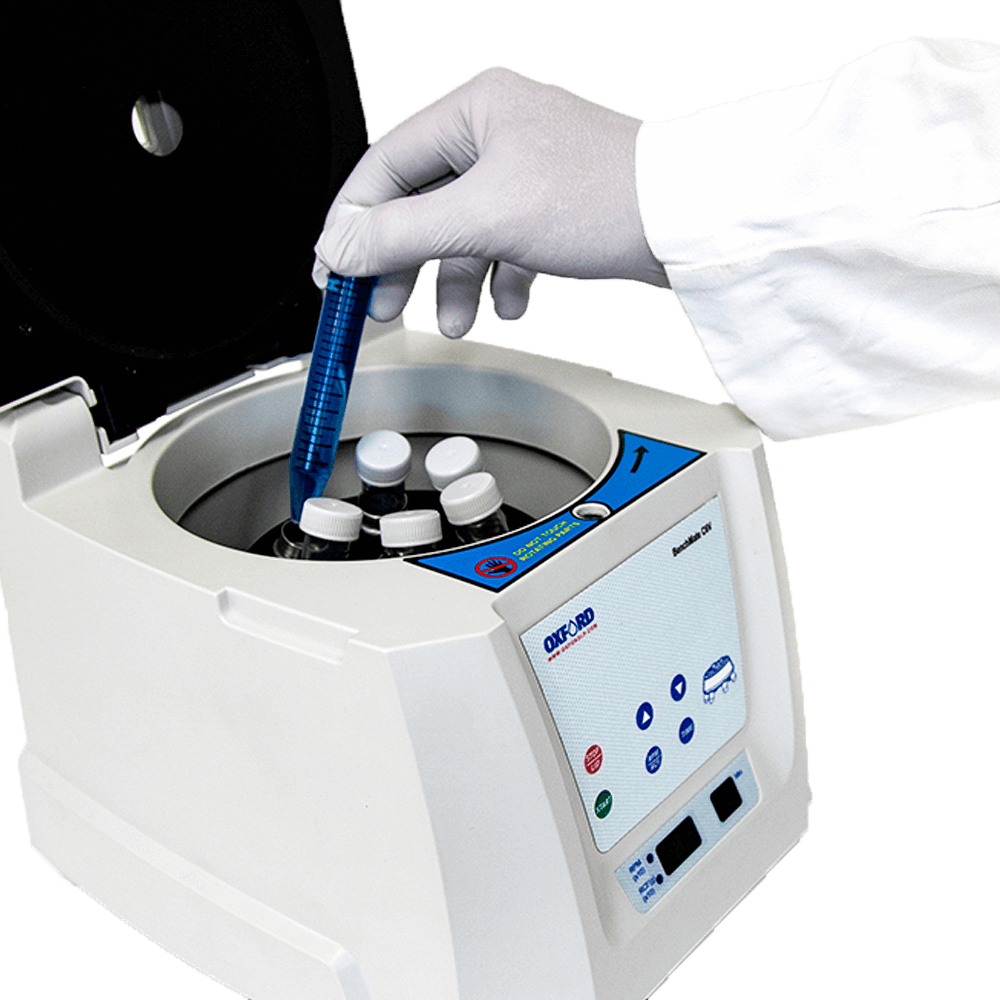
A clinical centrifuge works by spinning sample tubes at high rotational speeds to separate components based on their density. The process begins when a laboratory technologist places blood or other biological samples into special centrifuge tubes.
These tubes are then placed into the centrifuge rotor in balanced positions to ensure smooth operation.
Once the centrifuge lid is closed and the machine is activated, the rotor begins spinning rapidly. The high speed rotation creates centrifugal force that pushes heavier particles toward the outer bottom part of the tube.
In a blood sample, the red blood cells settle at the bottom, while plasma or serum remains above them.
The centrifugation process usually takes several minutes depending on the test requirements.
After the cycle finishes, the technologist removes the tubes from the machine. The separated components can then be used for specific laboratory tests.
For example, the clear serum portion of blood may be transferred into another container for biochemical analysis.
Important Features
• High speed centrifugal separation system
Allows laboratories to separate blood components quickly for diagnostic testing.
• Multiple tube rotor capacity
Allows several samples to be processed simultaneously.
• Adjustable speed control settings
Allows technicians to select appropriate rotation speeds for different sample types.
• Digital timer function
Allows precise control of centrifugation duration during laboratory procedures.
• Secure safety lid mechanism
Prevents operation when the lid is open and protects laboratory staff.
• Balanced rotor design
Ensures stable operation and reduces vibration during high speed rotation.
• Compact bench top design
Fits easily into laboratory workspaces in hospitals and clinics.
• Durable rotor and motor construction
Supports continuous use in busy diagnostic laboratories.
• Easy cleaning interior chamber
Supports laboratory hygiene and contamination control.
• Suitable for multiple laboratory applications
Used in hematology, biochemistry, microbiology, and clinical diagnostics.
How to Place Your Order – Especially If You Need One
Equip your laboratory with reliable sample preparation equipment. Fern Medical Supplies provides trusted clinical centrifuges for hospitals and diagnostic laboratories across Uganda.
Contact us today by phone or WhatsApp and we will arrange delivery anywhere in Uganda, including Juba, Goma, and surrounding regions.
FAQs
Why is balancing the rotor so critical?
Balancing is the most important safety rule. An unbalanced load causes excessive vibration, which can bend the drive shaft, destroy the motor, or even cause the rotor to detach.
How do I balance an odd number of tubes?
If you have an odd number of samples, create a balance tube by filling an identical empty tube with water or a liquid of similar density until it matches the weight of your sample.
When do I need a refrigerated centrifuge?
Refrigeration is necessary for heat-sensitive samples like enzymes, RNA, or certain blood proteins that can degrade as the motor generates heat during high-speed runs.
Can I open the lid as soon as the timer stops?
No. Never try to force the lid open while the rotor is still moving. Even after the motor stops, the rotor’s inertia can keep it spinning for several seconds. Most modern clinical units have an automatic electronic lock that only releases once the tachometer reads zero.
How full should I fill my centrifuge tubes?
Never overfill tubes generally, they should be no more than 3/4 full to prevent leaking during high-speed rotation.
What should I do if the centrifuge starts shaking?
If you notice visible wobbling or hear a loud grinding noise, unplug the unit immediately or press the emergency stop.
How do I clean up a spill safely?
If a tube breaks, wear PPE and use non-metallic forceps to remove large glass shards.
Do you have any inquiries or question regarding our Clinical Centrifuge service in Uganda

Order with trusted payment options.
Enjoy free delivery on all orders within Kampala.
Get expert help anytime, we’re always here for you.
Unlock exclusive deals, discounts offers.